Hydrogen silsesquioxane dissolved in butyl acetate 主要成份為氫基倍半矽氧烷溶於醋酸正丁酯
High resolution e-beam resist 高解析度電子束微影阻劑
Improved shelf life, as butyl acetate reduces gelling and particle formation 使用醋酸正丁酯為溶劑以減少結塊及顆粒的形成,有效的改善有效期限
Improved stability due to the addition of stabilizer molecules 添加穩定劑使產品更形穩定
Elimination of the presumably carcinogenic solvent MIBK (methyl isobutyl ketone) 不使用可能致癌的甲基異丁酮(MIBK)溶劑
Important information 提醒事項
Medusa 84 SiH must not be transferred to glass containers or filtered using a glass prefilter, as this will cause it to gel irreversibly. 產品接觸玻璃材質會產生不可逆凝結現像,請勿分裝於玻璃製容器,或使用玻璃製管道及過濾器。
The Medusa 84 SiH must reach room temperature before opening the bottle. Condensing water can affect the shelf life, as the resist is sensitive to moisture. 濕氣(水份)會降低有效期限。開瓶使用前需完全回溫至室溫。
…
Product Properties 產品物性
Properties I物性表
Properties I 物性表
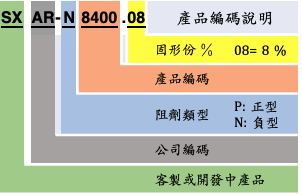
SX AR-N
Medusa 84 SiH
unit
8400.04
8400.08
8400.12
8400.22
Solid content 固型份%
%
4
8
12
22
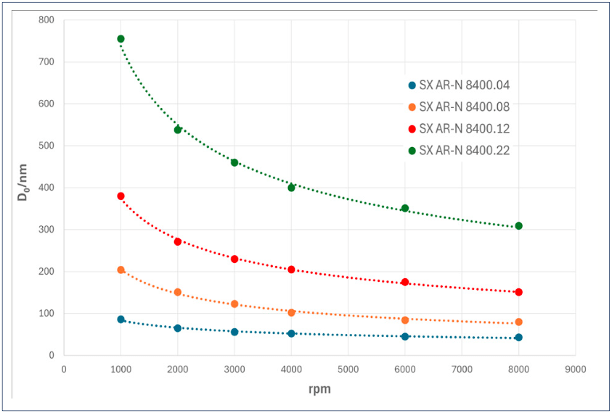
Film thickness@4000rpm
nm
50
100
200
400
Flash point 閃火點
℃
< 35 ℃
Storage temperature 儲存溫度
℃
8 – 12
-18 (minus 18)
Quaranty Shelf after shipment
month
3
3
Properties II
Glass transition temperature
℃
– –
Dielectric constant 介電常數
℃
3.0
Cauchy coefficients0
N0
1.4090
0
N1
460
0
N2
00
Plasma etching rate (nm/min)
1 Pa pressure/500W ICP power
-100 V bias substrate electrode
50 sccm of the respective gas
42 sccm CF4 / 25 sccm for CF4 + O2)
20 °C wafer temperature
Ar
34
SF6
146
CF4
175
CF4 + O2
82
O2
5.5
Cl2
64
Properties I SX AR-N
8400.04
8400.08
8400.12
8400.22
Solid content (%)
4
8
12
22
Film thickness@4000rpm (nm)
50
100
200
400
Flash point (℃)
< 35
Storage temperature (℃)
8 – 12
From minus 18
Properties II
Glass transition temp. (℃)
– –
Dielectric constant
3.0
Cauchy coefficients
N0
1.049
N1
46
N2
0
Plasma etching rates (nm/min)*
Ar
34
SF6
146
CF4
175
CF4+O2
82
O2
5.5
Cl2
64
*Reactor conditions 1 Pa reactor pressure 500 W ICP power -100 V bias substrate electrode 50 sccm of the respective process gas (42 sccm for CF4 / 25 sccm each for CF4 + O2) 20 °C wafer temperature
This diagram shows exemplary process steps for SX AR-N 8400 series resists. All specifications are guideline values
which have to be adapted to own specific conditions. For further information on processing, 👉“Detailed instructions for optimum processing of e-beam resists”. For recommendations on waste water treatment and general safety instructions, 👉”General product information on Allresist e-beam resists”. 表列為SX AR-N 8400系列產品製程參數的範例. 所有參數為參考值,使用者應依設備環境實際狀況加以調整
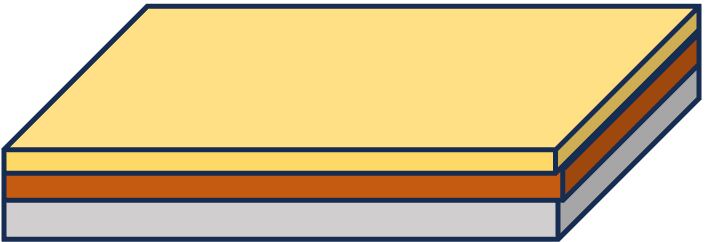
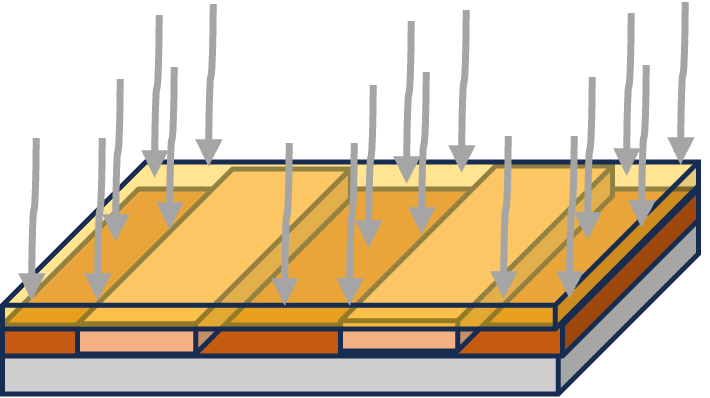
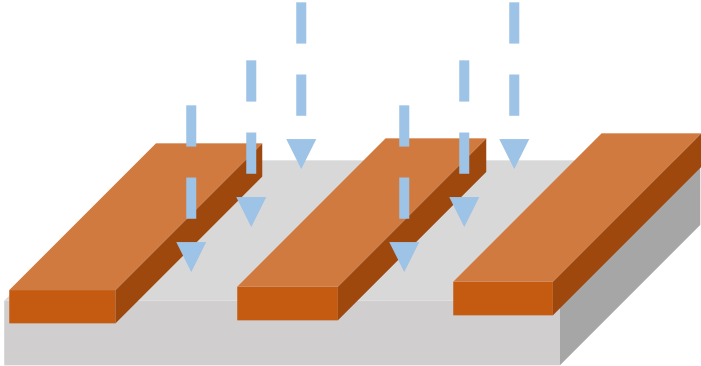
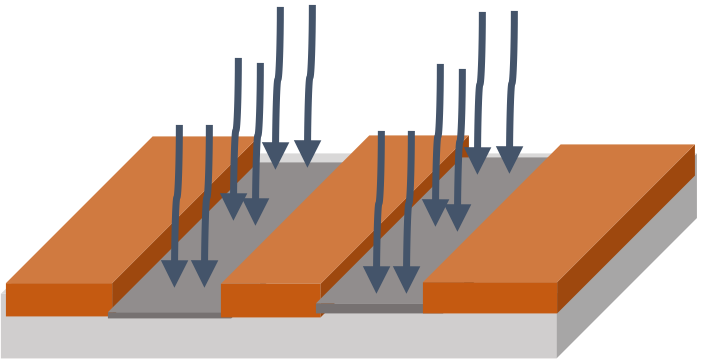
Process
AR-N 8400.08
Coating
100 nm@4000 rpm x 60 min
Soft bake (± 1℃)
90 ℃ x 1 min hot plate, or 90 ℃ x 5 min convection oven
Conductive coating
AR-PC 5094.02 40nm@4000rpm x 30sec for insulating substrate (quartz, glass, GaAs)
AR 300-44 developer for SX AR-N 8400.08 AR 300-73 for optimized contrast Rinse: DI-H2O 30 sec
Hard bake (optional)
250℃ x 30 min hot plate, or 250℃ x 30 convection oven for improve plasma etching resistance
User’s specific process
deposition, etching …
Removing
BOE 5:1 or 1% HF
…
Note on stability 穩定性說明
Coated substrates can be stored under normal conditions and processed without loss of sensitivity or resolution even after several days. The use of vacuum or inert gas is not necessary. 已塗佈阻劑之基板在正常情況下仍可維持其敏感度或解析度至數日。(無需置於真空或鈍氣環境)。
…
Contrast curve
Contrast curves of Medusa 84 SiH with a dwell time of 3 days between irradiation and development. Developing with a higher TMAH concentration leads to improved contrast with only a slightly higher dose.
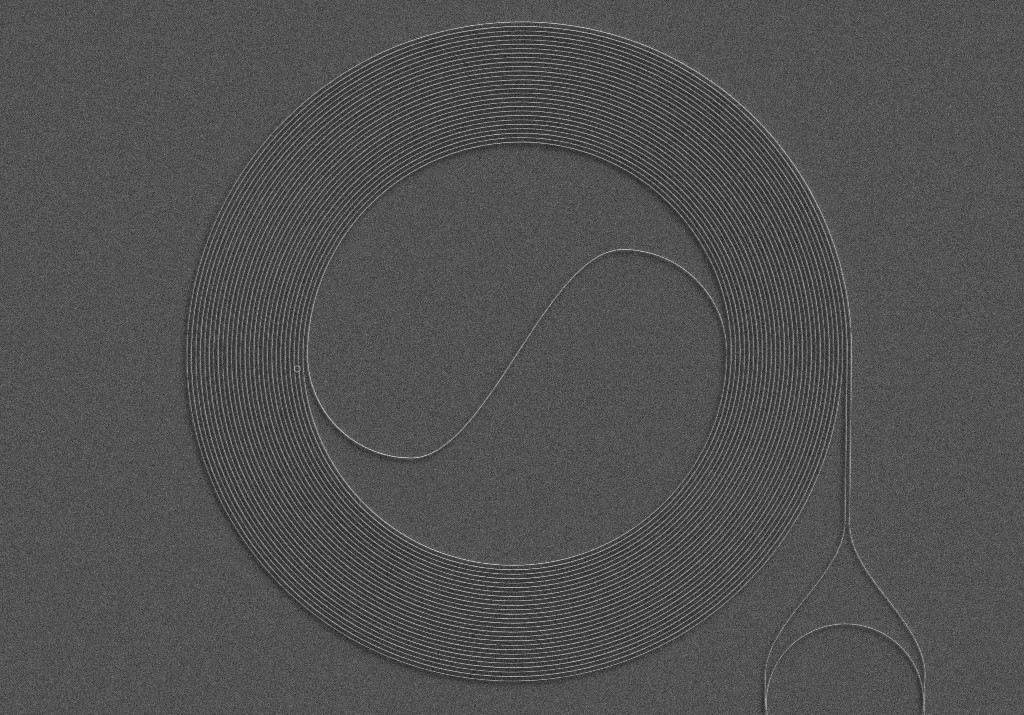
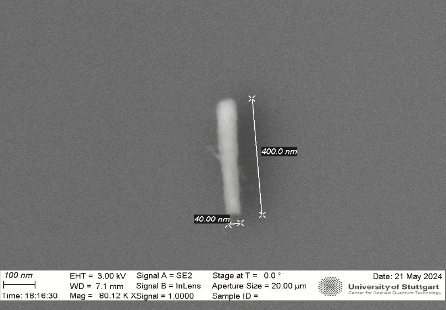
Nanorod written on silicon with 2000 µC/cm² @50kV and developed with AR 300-44 (2.38%TMAH). Aspect ratio of up to 10 was achieved. R. Stöhr, ZAQuant University of Stuttgart
…
Medusa 84 SiH on quartz with AR-PC 5094.02 導電塗層搭配HSQ範例
Process stability and storage under nitrogen atmosphere
製程與儲存穩定性
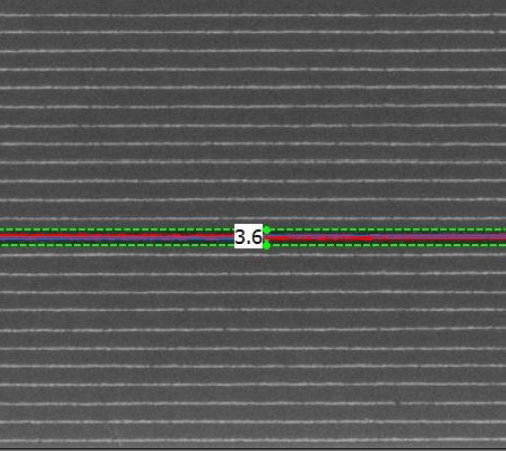
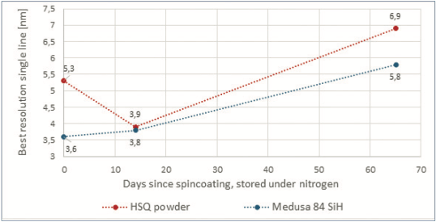
The HSQ polymer, developed by Allresist, has a unique manufacturing and purifi cation process. This results in the Medusa 84 SiH product being optimised in terms of its properties, such as minimum feature size, line edge roughness and process stability. This was confi rmed in a study conducted by RAITH GmbH with their Voyager EBL-System at 50kV, 120 pA, base dose: 12.000 pC/cm, developer: KOH 1% 1 min. The Medusa 84 SiH was compared with an HSQ powder, and the smallest possible line width was determined.
The highest achievable resolution of the Medusa 84 SiH is 3.6 nm on a freshly coated wafer (day 0), whereas the HSQ powder achieved significantly poorer values of 5.3 nm. Medusa 84 SiH also demonstrates a more consistent increase in achievable line width, with minimal change to 3.8 nm after 14 days. In contrast, the HSQ powder exhibited greater fluctuations throughout the entire observation period.
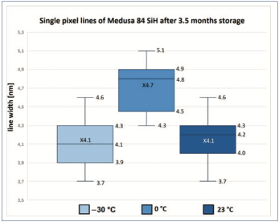
After 3.5 months, the effects of storing the Medusa 84 SiH resist solution at different temperatures (-30°C, 0°C and 23°C) showed only minor fluctuations. No degradation was observed despite storage temperatures exceeding the recommended range of 8-12 °C.
Double-coating for extended layer thickness range
厚膜製程-兩次塗佈
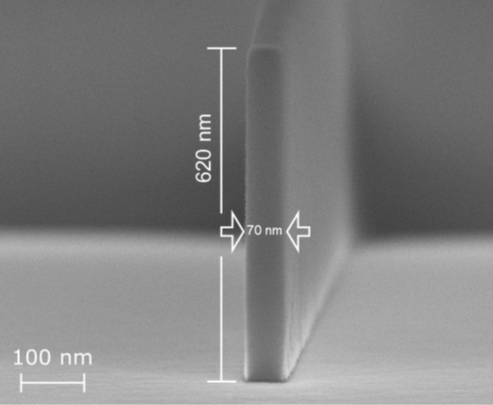
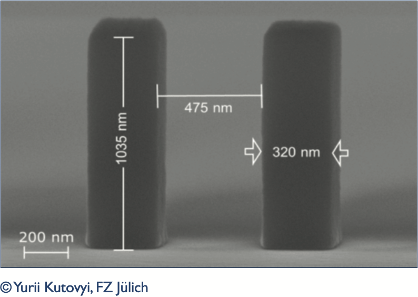
Medusa 84 SiH allows for layer thicknesses of up to 1400 nm with double coating. This expands the range of applications for the thickest variant, SX AR-N 8400.22, which achieves a thickness of only 800 nm in a single coating at 1000 rpm. This improvement is achieved through the use of butyl acetate as a solvent instead of MIBK, as well as the high purity of the HSQ polymer in the solution.
The double coating process was demonstrated at FZ Jülich and requires precise control of the process flow. The final patterned structures of the double coating process are shown in the picture below. The process begins with a spin-coating step at 2,000 rpm using the SX AR-N 8400.22, followed by a 5-minute bake at 210 °C on a hotplate. It is critical that the wafer is allowed to cool for five minutes before the second spin-coating is applied. A second post-application bake is then carried out for 5 minutes at 130 °C (hotplate). Electron-beam exposure is then carried out at 100 kV with a beam current of 200 pA and a dose of 600 µC/cm². No post-exposure bake is required. Development is performed in AR 300-73 (6.5% TMAH) for seven minutes, followed by rinsing with deionized water and blow-dry.
德國的Jülich 研究中心展示了雙層塗佈高厚度的製程能力。(下圖)
阻劑:AR-N8400.22 1st塗佈: 2,000 rpm 軟考:210℃ /5分鐘 hot plate 冷卻:5分鐘 (重要步驟) 2nd塗佈:(依需要厚度調整轉速) 軟烤:130℃/5分鐘,hot plate 曝光:100kV, 200pA, 600uC/cm2 PEB:無 顯影:AR 300-73 (TMAH 6.5%)/7分鐘 Rinse:DI water & air dry









 Techpoint 久理企業