
AR-N 7720 series negative CAR type e-beam lithography resist
High resolution resists for the production of diffractive optics
…
Product brief 產品簡介
AR-N 7720系列, 為化學放大 chemically amplified (CAR)負型電子束微影阻劑 (negative tone EBL resist). 可在電子束及深紫外線曝光(deep UV), 適合於各類微奈米製程. 例如繞射光學(Diffractive optics) 產品系列目前有:
AR-N 7720.13
AR-N 7720.30
…
Product series & Code 產品比較及編碼說明:
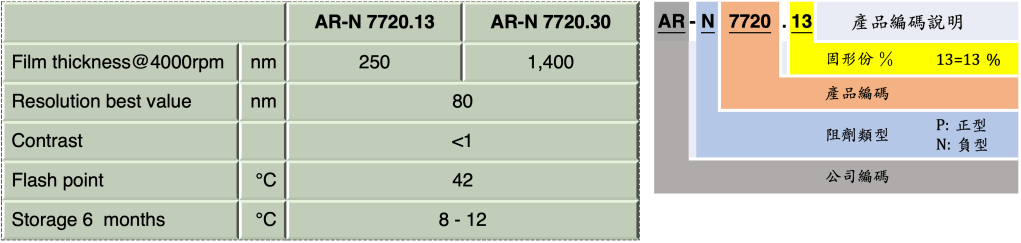
…
Packing 產品包裝:
✅ 250 ml /瓶
✅ 1 L /瓶
其它包裝可依客戶需求增加.
Shipping 出貨:
本產品未列固定生產排程,交期與報價需先詢問。估計交期為:
✅ 4 – 8 週. 徳國運出
…
Product Features 產品特性
- e-beam, deep UV; chemically enhanced (CAR)
化學放大型阻劑,曝光源可為電子束, 深紫外線 - flat gradation for three-dimensional resist profiles for diffractive optics and holograms
對比度低(<1), 適合繞射光學與全像攝影等需3D立體結構的應用 - •negative-tone with high resolution in the UV-range 248-265 nm and 290-330 nm
在紫外線波長248 – 265 nm及290 – 330nm下曝光為高解析度負型模式
- plasma etching resistant, temperature stable up to 140 °C
耐乾蝕刻, 高溫穩性定達140℃ - novolac, acid generator, cross-linking agent
主要成份含酚醛樹酯, 光酸產生劑,架橋劑等 - safer solvent PGMEA
溶劑使用較安全的丙二醇甲醚醋酸酯
…
Product Properties 產品物性
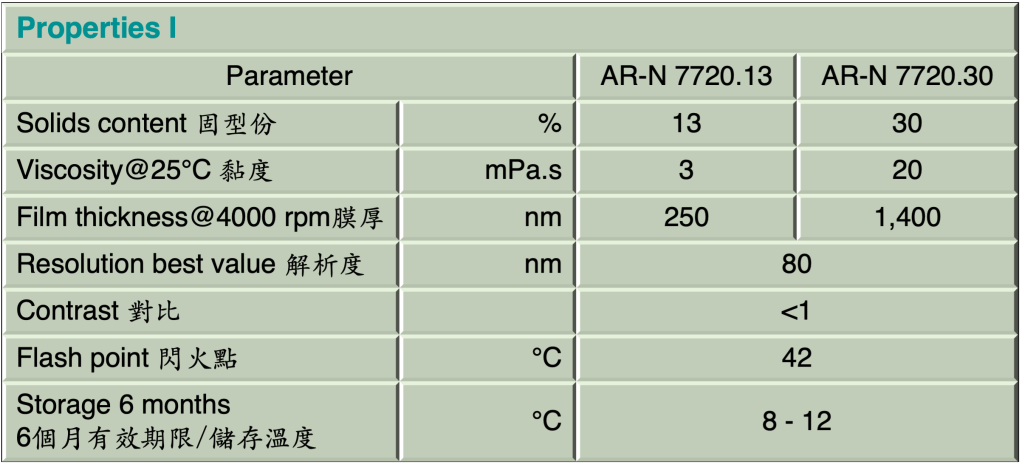
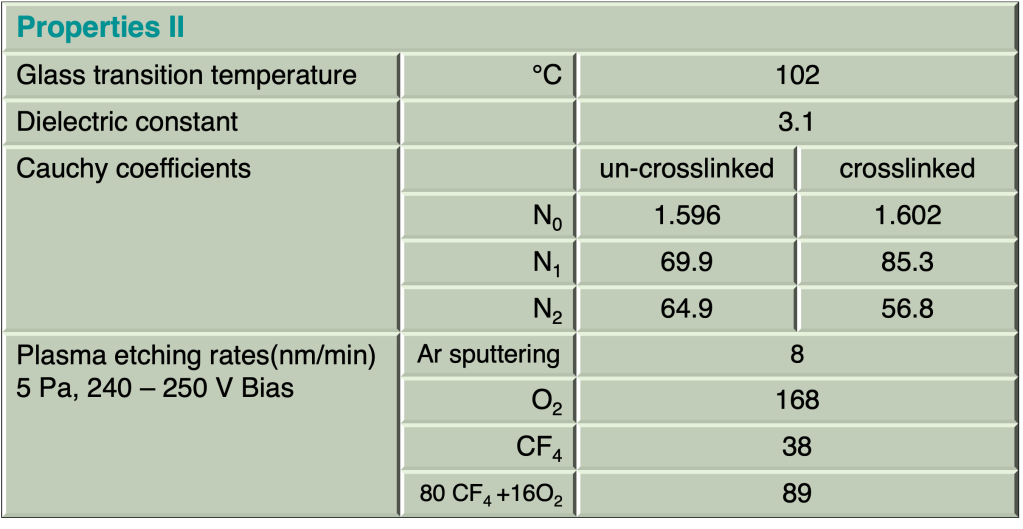
…
Spin curve 塗佈曲線
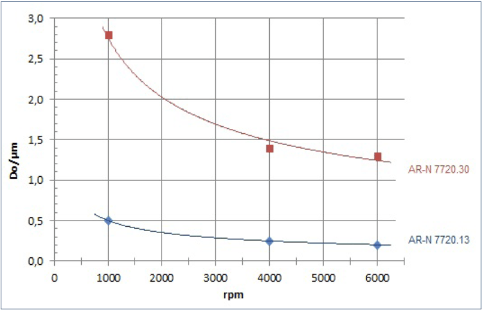
◼︎AR-N 7720.30
◆AR-N 7720.13
…
Structure resolution
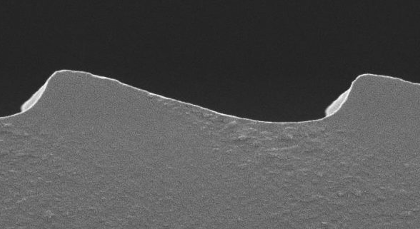
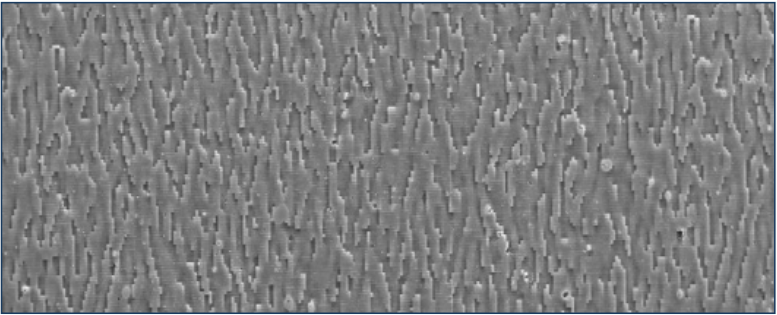
AR-N 7720.13. Sinusoidal structures
Resist structures
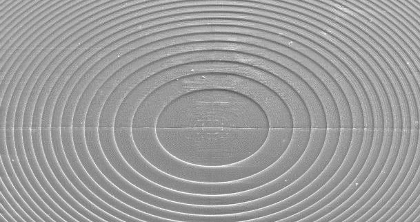
Diffractive optic transferred with AR-N
7720.30 into silicone
Process parameters
| Substrate | 4″ Si wafer |
| Soft bake | 85℃x90sec, hot plate |
| Exposure | Vistec Lion, 12.5 kV |
| Development | AR 300-47, 4:1, 60sec 22℃ |
…
Process baseline 製程參數
This diagram shows exemplary process steps for AR-N 7720 resists. All specifications are guideline values which have to be adapted to own specific conditions. For further information on processing, 👉“Detailed instructions for optimum processing of e-beam resists”. For recommendations on waste water treatment and general safety instructions,
👉”General product information on Allresist e-beam resists”.
表列為AR-N 7720阻劑產品製程參數的範例. 所有參數為參考值,使用者應依設備環境實際狀況加以調整
| Process | AR-N 7720.30 | AR-N 7720.13 |
|---|---|---|
Coating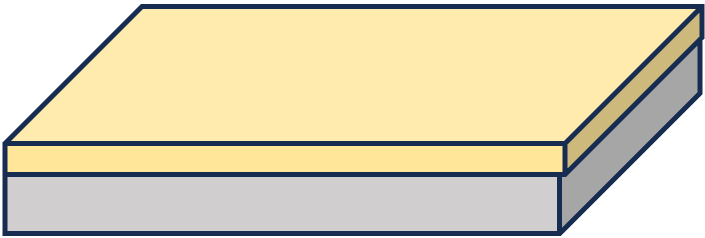 | 1.4 um @4000 rpm x 60sec | 0.25 um @4000 rpm x 60 sec |
soft-bake (±1℃) | 85℃ x 2 min/hot plate, or 85℃ x 30 min/convection oven | |
| e-Beam exposure dose (E0) 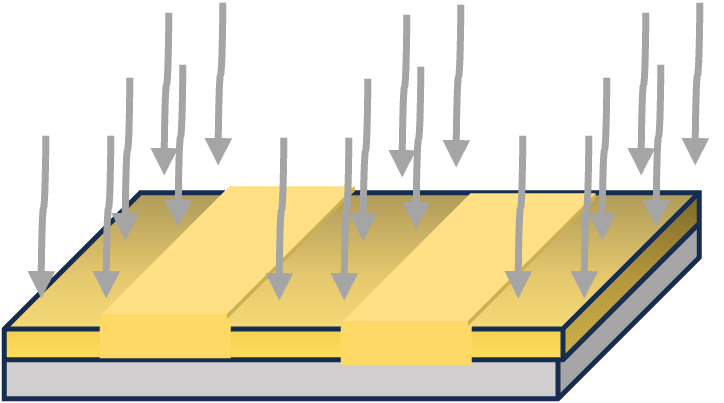 | Vistec Lion 12.5 kV e-beam E0 | |
| 100 uC/cm2 | 35 uC/cm2 | |
Cross-linking bake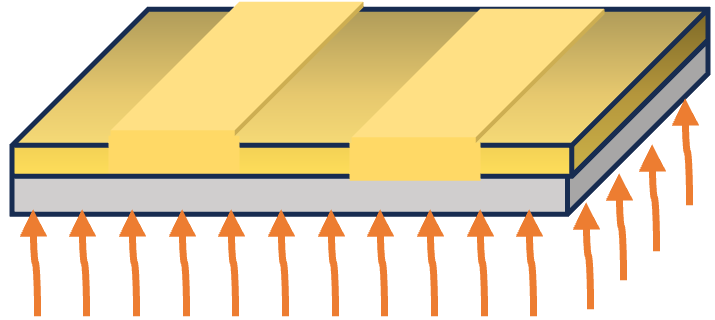 | 105 °C, 1 min hot plate or 100 °C, 60 min convection oven | |
| Post-bake | 70 °C, 20 min, hot plate or 70 °C, 120 min convection oven for preventive avoidance of roughnesses | |
| Development 21-23℃ puddle 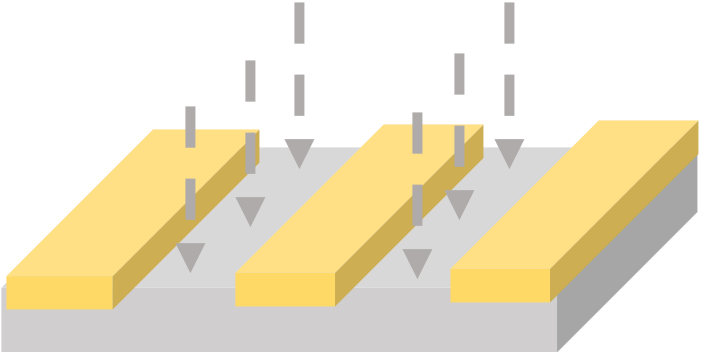 | AR 300-47, 90 sec | AR 300-47, 4:1, 60 sec |
Rinse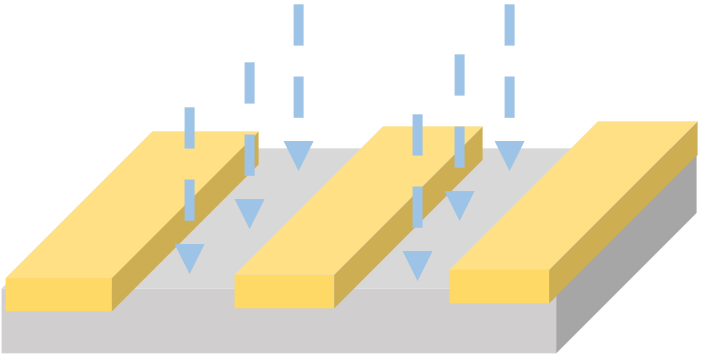 | DI water, 30 sec | |
| Post-bake (optional) 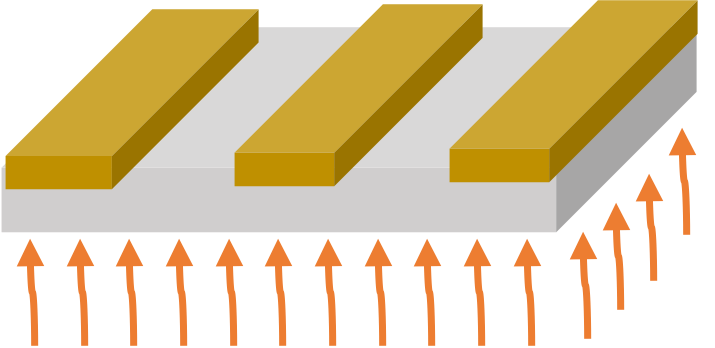 | 120 ℃ x 1 min hot plate, or 120 ℃ x 25 min convection oven for slightly enhanced plasma etching resistance | |
| Customer specific process 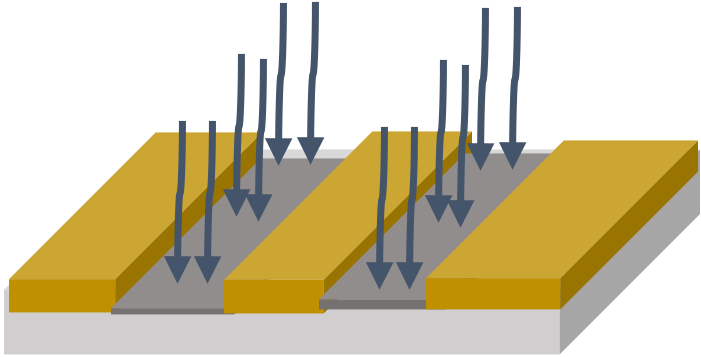 | Fabrication of holograms or diffractive optics | |
Removal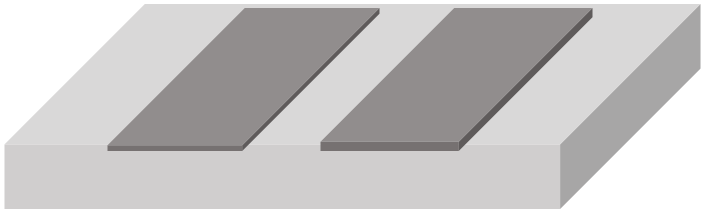 | AR 300-76, or O2 plasma ashing | |
…
Development recommendation
…
Process instruction 製程說明
These resists are predestined for e-beam exposure, but also suitable for UV exposure. During e-beam exposure, the resist works in a negative mode. The exposure dose mainly depends on the acceleration voltage, the substrate and the film thickness. The resist also work in a negative mode after deep UV exposure if the image-wise exposure is performed at a wavelength of 248-265 and 290-330 nm. A bake step is mandatory after exposure (e-beam/UV) to induce the required crosslinking. Contrast and development rate strongly depend on the tempering. Recommended is a temperature of 105 °C (hot plate, 2 min), with possible variation in a range of ± 5°C. Higher crosslinking tempera- tures require stronger developers.
For resist AR-N 7720 it is recommended to add a further tempering step at 60 – 70 °C for 1-3 h in the oven prior to development to avoid possibly occurring roughnesses of the structures to be developed. Contrast and development rate can be influenced to a large degree if developer strength and tempering temperature are coordinated accordingly. The general rule is: the weaker the developer, the higher is the contrast and the lower the development rate. The de- velopment time ideally is about 60 s (30 … 120 s) at 21 – 23 °C. Shorter times for complete development will attack the crosslinked structures. Own tests with respect to the development process are required.
AR-N 7720系列是設計為電子束微影阻劑,但也適合於紫外線曝光. 在電子束曝光下為負型模式.
曝光劑量與加速電壓,基板種類及膜厚有關. 在深紫外線波長 248-265nm及390-330nm下曝光亦為負型模式.
曝後烤為促使阻劑產生架橋的必要程序. 阻劑的對比度與顯影速率與曝後烤有關. 建議的基本參數為105℃ ±5℃在熱板上烤2分鐘. 較高的架橋(曝後烤)溫度需使用較強的顯影劑.
顯影前建議再以60-70℃於烤箱內烘烤約1-3小時,可避免結構的表面粗糙化.
顯影劑的選擇與架橋(曝後烤)溫度的搭配,直接影響對比與顯影速率. ㄧ般的原則是:較弱的顯影劑會有較高的對比與較低的顯影速率. 理想的顯影時間為在21 -23℃下顯影60 sec. (30 – 120 sec). 短時間就完全顯影容易有顯影劑攻擊已架橋的結構. 使用者需對顯影製程進行測試以合乎自身需求.
…
Three-dimensional, “analogous” structures 3D類比結構
For most applications, a high contrast is desired to obtain a high resolution. For the production of holograms, diffrac- tive optics or curved surfaces however, in particular resists with low contrast are predestined. Resist AR-N 7720 was specifically designed for these applications. The active components acid generator and crosslinking agent were both substantially reduced as compared to “digital” resists, which results in lower crosslinking efficiency. With increasing exposure dose, consequently a defined increase of the film thickness is obtained (see diagram below).
大部份阻劑的應用都需要高對比以獲得高解析度. 但全像攝影及繞射光學的應用則需要低對比的阻劑. AR-N 7720是設計做為這方面的應用. 其配方的光酸產生劑及架橋劑等作用成份與其它阻劑相比,含量減少狠多,因此架橋的效率低. 曝光劑量需隨膜厚增加, 如下圖.
Film build-up and dose dependency

AR-N 7720.30: The build-up proceeds constantly across the entire dose range as indicated. Film thickness 1.4 μm, acceleration voltage 12.5 kV, crosslinking bake 100 °C, 3 min, postbake 70 °C, 4 h convection oven, developer AR 300-47 (4 :1 dilution).
Dose sequence of AR-N 7720.30
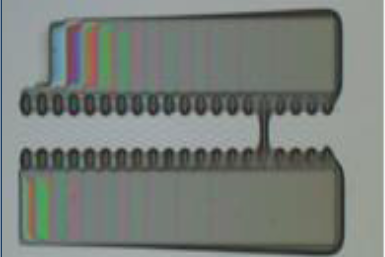
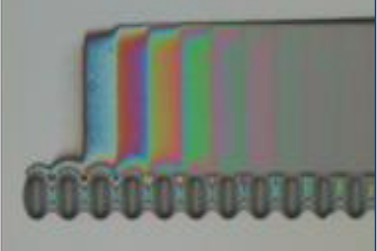
Up to a film thickness of 1.4 μm, smooth and defined surfaces are obtained.
Application AR-N 7720
Fabrication of a topologically structured code with AR-N 7720.30
…

