
Polyimide two-layer systems
In certain applications it is desirable to keep the original properties of a polymer unchanged, e.g. without addition of light-sensitive components like for example for a use as moisture sensor.
The patterning of the pure polyimide resist (SX AR-P 5000/80) is in this case possible using a two-layer system analogue to AR-P 5400 / AR-P 3500.
For this application, a surprisingly simple procedure was developed:

Table 1: Process parameters for the two-layer polyimide process
The double coating can be carried out without any problems. After exposure, development of the photoresist and the polyimide is performed in one step. Removal of the now superfluous photoresist layer can easily be realized by flood exposure and another development step using a weaker developer.
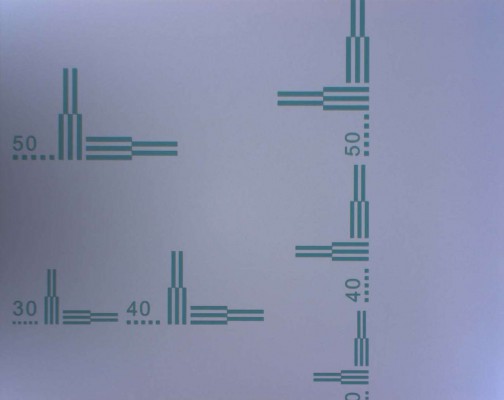
Image 1: Structures of the pure polyimide after removal of the photoresists, film thickness of 600 nm
Overview of photoresist-others
Alkali-stable positive resist obtained after treatment with HMDS
Aqueous negative resist based on gelatine
Atlas 46 for nanoimprint lithography
Ethanol and toluene-resistant photoresist AR-U 4060
Fluorescent resist structures with photoresists
Laser ablation of PPA (Phoenix 81)
Negative CAR PMMA resist SX AR-N 4810/1
Polyimide two-layer systems
Positive polyimide one-layer resist
Resist for near infrared (NIR)
Structuring by ablation of the resist materials
Structuring of polyphthalaldehydes with photolithography
Surface imaging resist system SX AR-N 7100 – silylable photoresist
Top surface imaging (TSI) photoresist – principles
Two-layer photoresist system for water-sensitive substrates
Two-layer resist system for hydrofluoric acid etching
 Techpoint 久理企業